When people start banging on about how overpopulation is not a problem because there are more than enough room/resources to maintain every single human and the only problem is that elites are hoarding everything, it’s all I can do not to scream because, while yes, the ownership class has privatized the shit out of potable water and arable land, everyday humans are also spoiling a vast amount of life-supporting water, land, and air trying to maintain the style many have become accustomed to living in (or by just trying to survive in some instances) – and a lot of that pollution comes from dealing with the waste we produce as consumers & some from just being bioforms with a physical need to excrete. There’s also the problem of what to do with the husks we leave once the Spark of Life has left the building:

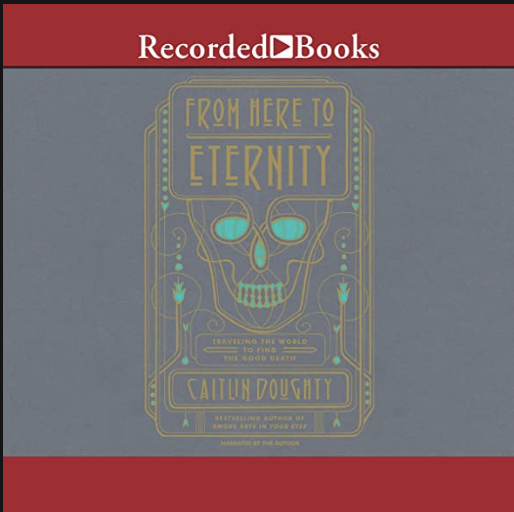
I personally find cemeteries much more attractive than golf courses, but both take a lot of space that may be better used for the Living. In this book, the founder of The Order of The Good Death travels the world for us and finds how different groups/communities deal with death and body disposal in ways that do and don’t allow for Death & the Dead to be acknowledged and embraced by the living who remain. Not that the cultures that encourage the dead to remain in the home for as long as is possible are super appetizing to moi, but such traditions work for those people and allow much of the deceased, physically & otherwise, to remain included and integrated in their societies.
A lot of what the author and The Order of The Good Death (please check out their website) are working on here is just getting westerners back into the death process. Having relatively recently seen my father take his last breath, ducked out so my niece (she works hospice) and her boss could tidy him up and then said goodbye to his physical form on the front sidewalk as the mortuary wheeled him off to be returned eventually in ash form, the whole concept of how removed most of us have gotten from death work hit home. I don’t know if I would have been down with washing the body, but the author states that death care could be as simple as combing the corpse’s hair one last time. Baby steps, as needed.
I’m pro-cremation, myself (and who knew there’s a community in Colorado who does it out in the open?), but there is a serious issue of the resources required to reduce our juicy selves down to ash. Adding to the problem, living in a society that is really just an economic system means finances are directly tied to how one sees their loved ones off and the inequities are many. This book offers much to think about and will hopefully open minds to considering ways of dealing with Death and the Dead that will enrich rather than deplete our Lives and our World.
 Inhaling & Exhaling
Leave a comment