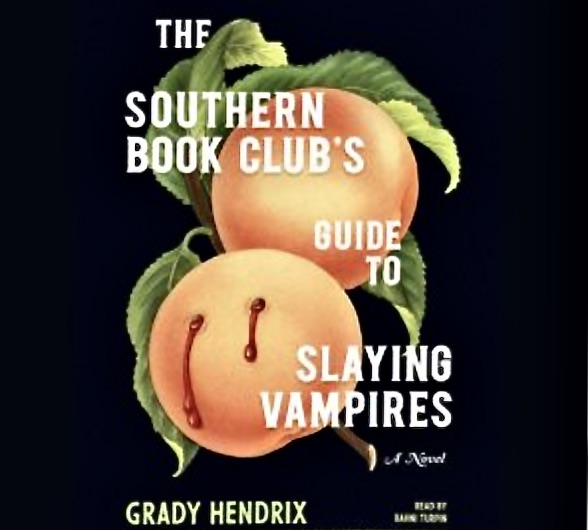
Southern women and charming vampires is familiar territory. I miss Sookie Stackhouse and the completely separate (and more diverse) ‘verse of True Blood, tho’ to be honest I never finished the tv series due to a dislike of Sookie’s escape into faerie land ending the last season I watched. Aaaanyway, I grabbed this little gem off public library shelves because I love Bahni Turpin’s voice and I believe the back cover mentioned “humour”.
I browsed through the comments on Good Reads and found the most-liked review was by a white guy who had just also read Hood Feminism (one of my fave books of 2020) who felt that the book (written by another white guy) did nothing right by its Black or female characters, stating that he noticed in the first half of the book that, “the Black characters in the book were only ever unnamed waiters or caregivers without speaking roles and it felt iffy.” Considering that the story is set during the ’80s-’90s in a middle class white suburb of Charleston, I was actually sort of surprised when there were suddenly Black characters along with a back story of racist violence that was not out of character for the US South. Yes, the Black characters in this novel live in a far less affluent neighbourhood that most of the nice white ladies are terrified to venture into, as they have been carefully taught to imagine the worst. But those Black people have plenty to say and we hear their names loud and clear, if mostly through the character of Mrs. Greene, the character who bridges the two communities. And when the young Black men do act threateningly to uninvited white visitors, we quickly learn it is because they are acting from a state of heightened defense as it is evident that their community is again under a direct attack by unidentified white people.
All of the characters in this story are people who have been born into a world of very clear boundaries and beliefs that keep Black and non-Black people living away from each other, men and women running in different spheres of influence, women competing for what little power is allowed them, and this is all very clearly in service of – tinhorn fanfare, please – the straight white men who rule over all. As nice married ladies, the white women who are the main characters, have signed over pretty much all sense of agency to their petty, greedy, and small-minded husbands. Any moves that are made without the blessing of the men who band together easily to protect their power are quickly squashed and justified as being in the best interest of the women they claim to protect, rather than just control. Most of the women give little thought to their golden cages until they realize their children, and not just the children of the Black community, are apt to be sacrificed to the vampiric stranger who has embedded himself as the benefactor of their little society, running financial schemes that enrich the white men and inflate their already unjustifiably inflated egos. The husbands’ wonderfully white supremacist way of ignoring any history or facts or evidence that would contradict their right to do as they please to make more money and run things to suit only themselves – and their wives’ willingness to swallow it all to keep themselves only one rung below the men, but above so many others – is a perfect mirror of what can be seen in real life.
No one person can fix the horrific mess that these people unleashed upon themselves and I would say that it is in making the project a group project to save themselves that the Good Read’s reviewer’s “White Saviour” claim non-applicable to this story. Every woman has a part to play, everyone gets dirty, and the benefits are only Big Picture: not so great on the small scale.
This tale takes place before smart phones and other tech that might have helped the women suss out the real dangers (as opposed to the financial & social currency threats that keep them toeing the party line through too much of the book) and put together a plan with a bit more ease. There was also enough humour to keep me going – Grace, the main character, has her moments due to her growing inability to function within the constraints of her indoctrination which she realizes are completely divorced from the reality and/or humanity, which makes sense given the relation of oppression to humour. Some things only hit you later, as when you remember that the book Grace failed to read for her original book club was Cry the Beloved Country – would the book have given her a little more understanding of systemic inequality had she read and discussed it before all hell broke loose?
The detailed ick factor is super high and there’s even a very unsettling rape, so be warned. I only wish that ALL the monsters in this tale got a taste of real and gory justice.
 Inhaling & Exhaling
Leave a comment