-

Yes, this is a manifesto, not technically a ‘book’, but it was sent to me originally in PDF format by a good Irish comrade and I read it with my eyes as well as my ears because it made for an excellent follow-up to last years Hood Feminism and other call outs of mainstream liberal/neoliberal feminism by the people it fails to properly address or serve. Tired of GirlBoss energies and women whose goals really only serve the existing capitalistic societies that are responsible for destroying our lives & our planet, this manifesto offers a vision of something better, asking us to work for something beyond “success” as defined by the elites who usually shape the discourses about “living your best life”.
The authors promote the use of strikes (huelgas) as tools to fight the neoliberalism that is the handmaiden of environmental death & destruction around the world: “Four decades of neoliberalism have driven down wages, weakened labor rights, ravaged the environment, and usurped the energies available to sustain families and communities-all while spreading the tentacles of finance across the social fabric.” This manifesto also clarifies how awareness of intersectionality makes this feminism for the 99% so much more than the individualist nightmare that haunts the neoliberal feminism too many still subscribe to with their “leaning in” and “glass ceilings”. The writing on social reproduction is especially eye-opening as it gives us a clear target for sticking it to The Man: stop creating more bricks for the wall.
Here’s a link to the PDF – I can’t recommend it enough! https://outraspalavras.net/wp-content/uploads/2019/03/Feminism-for-the-99.pdf
-

Finally got ’round to reading this ‘required’ text for those interested in confronting the imperialist colonizer chokehold that capitalism has on most of the world. Freire’s insistence that those most oppressed – those who enjoy pretty much none of the comforts that are used by the ownership class to mollify the mushy middle in most societies – must be the people who lead us to a better way of doing things has a definite ring of truth to it. However, in order for these people to rise to being able to change things rather than to simply attempt to reform systems so that those on the top don’t have to face any consequence like, oh … elimination/extinction, we all must first clearly identify who the oppressors are and then decide one and for all which side we are on and commit to it.
Having faced the reality of what is being done to each of us, we must then look at the tools used to keep people from realizing that things could be better … and here we see that our educational systems are – when they are even accessible to people – little more than propaganda-dispensing programs that force feed ideas into minds that are not asked to engage beyond simply showing up and submitting to the indoctrination. Freire rightly believes that education should be a dialogue that allows for exchanges that would create knowledge that is more meaningful to both the educator and the student and that ends the authoritarian mindset that current educational systems promote.
Freire is very big on dialogue and I can’t disagree that it is our growing inability to talk/communicate amongst ourselves that lets the oppressive classes run the show to suit themselves. They manipulate things to keep themselves in power and we react, but since they are protected from our reactions by layers of armed police & other class traitors, we wind up acting out on each other rather than listening to each others truths. Talking and listening would encourage an understanding that a small number of greedy people are doing harmful things that affect all of us, but that those harms are not experienced equally and that we would probably do better by addressing the physically real harms together, in good faith, sooner than later.
-

NPR’s Jason Sheehan wrote in his review of this dense read:
“What would you do if monsters were real?
Cadwell Turnbull knows exactly what you’d do. Almost all of you. Almost all the time.
You’d do nothing.“
So much happens in this book. Remember True Blood and/or the Sookie Stackhouse series in which vampires came out of the closet and then all the other supernatural types were having to figure out whether or not to reveal themselves? Well here we have an African American author who envisions yet another video of police murdering a Black man, only, this time, the victim transforms into a wolf before dying and other werewolves protest by revealing themselves forcing people to deal with “the Fracture” – a sudden revelation that magic and supernaturals are real and helpful and harmful and neutral and chaotic and rife for exploitation as everything else in existence.
And people still want to believe otherwise. Or just want to kill it with fire. Or do any of the other useless and/or harmful things that humans have always done to avoid reality or change or any/all other things that need to be dealt with in order to avoid collective pain and loss. See also the recent, Don’t Look Up.
The title grabbed me out of a stack of selections of horror written by POC: and yes, the author does seem to have a wonderfully inclusive anarchist bent that gives us a Rainbow Coalition of characters with a variety of classes, ideologies, sexualities (included ace) and gender identities to deal with on top of their merely mortal or fantastically magical selves – many of whom are trying to create a better way of living that would remove the hierarchies that have us already teetering on the eve of destruction. I actually had a Queer Nation flashback during a scene taking place during a meeting of a collective in which the very different members all had equal say and consensus was sought. Meetings are never a fun way to spend an evening, but I’d rather attend a month of meetings with people trying to make society better via self education & direct action than avoid the millions of business meetings held every hour by those whose only goal is squeezing out more profits before the sun explodes.
I really want to think that, faced with a world where so many more things are possible, I would try and do something to make things better with many of the newly revealed beings. Magical Nation or some such, maybe?
-
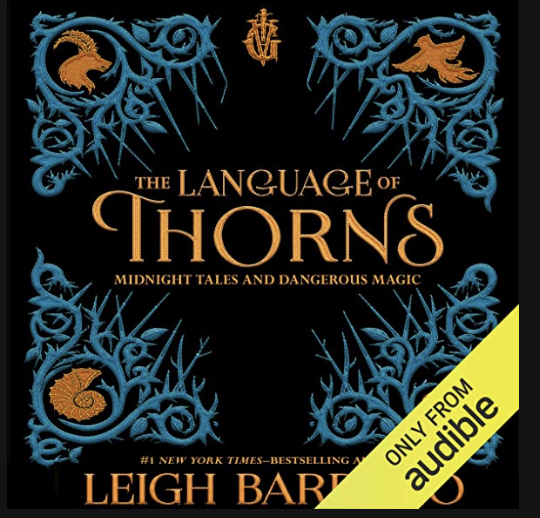
I just found out that the author has a tv series out there called Shadow & Bone that is set in the same universe as my favourite story in this collection of 6 tales that offer better lessons (as I see it) than the Grimms or Hans Christian some riff from. Three have a Russian-flavour that reminds me of Baba Yaga & The Firebird – I’ve always loved fairy tales/tales of magics from all cultures – never for any of the romance (which, tbh was usually pretty bleak and nothing that would make heterosexual marriage seem like a chance for a happily ever after as princes seems more than willing to sell their hard-won princesses down the river at the first sign of more trouble) – but more for the tasks and deal-makings and talking animals. Really, it’s just amazing that I didn’t turn out a Furry.
Here we have some new twists on the Nutcracker and the Little Mermaid along with talking animals, gingerbread girls, and some well deserved rough justice meted out to lying rulers. The tales are worded like proper tales to be told before warm fires on cold winter nights – really the language is quite beautiful. My favourite story, “LIttle Knife” contains a line that rang so wonderfully true, like the finest lesson to be learned: “To use a thing is not to own it.” The ‘thing’ in this instance is a river and once freed, it exacts revenge upon those who dammed it for profit while offering salvation to the woman also being treated as property by the men who would have water serve their greed. Water is Life but can also move humans into the past tense when it’s been treated horribly and not allowed to follow its own Nature.
A good story for late stage capitalists everywhere.
-
“Comparison is the thief of joy.” ~Teddy Roosevelt
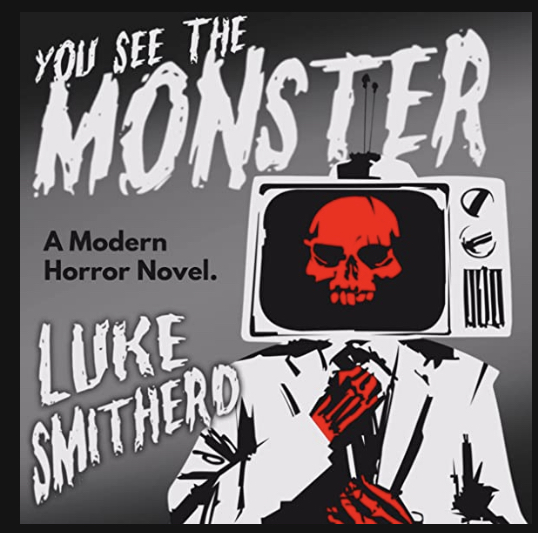
Monsters are in the zeitgeist right now as we are maybe beginning to realize that the real monsters are the so-called friends we made along the way: tech, capitalism, on-demand everything, free shipping, etc. This was an Audible Daily Deal that paid off in a well-crafted story that gives us three apparently unrelated tales to begin with and eventually pulls them all together as they deal with the ancient creatures that have been lurking on the sidelines who are now able to make their move to the front because we are all so distracted that we can’t be curious about things that are happening to those around us until it’s too late.
These beings are hungry and demanding, but then again so is everything else in our society so they sort of fit right in, using our amazing capacity for self-interest to make themselves go viral, if you will. They are also all about the rules, as is often the case with old magics. The main characters are two men with many a flaw who would do well in film noir: the women would also not be out of place in one of those flicks, struggling to keep it together and get to another day or trying to get the males in their lives to step up a bit.
However, those creatures have gotten very good at writing binding contracts.
-

The one really big problem with listening to books as opposed to holding the pages in your hand comes when you need to refer to some sort of glossary or list in order to understand new words or concepts that are unique to the book. Luckily in the Age of Computers, one can usually find a PDF or other downloadable version of the glossary or list that can be saved on the device where it can be called up as needed … and this was a tale that needed a lot of calling up for reference because I was not about to memorize what foods must be eaten for what sins!
This book is set in a sort of alternative Elizabethan Albion where, before you die you confess all you sins to a Sin Eater and shortly therafter that person eats foods that correspond to your sins while you lie dead next to her. There was a Night Gallery episode that was about medieval sin eating, but it wasn’t as demanding as this. In this ‘verse, sin eating is a punishment, like execution, and those so sentenced are marked and forced to live in silence except for when performing their societal role which involves reciting something to the dying to get them to spill their secrets and then listing off the foods that will need to be prepared. Otherwise, the Sin Eater is shunned as they are damned be being full of the sins of others.
However, those closest to the sharing the sin eaters fate (various criminals and those unburdened by money or strong religious belief) may chose to overlook the assumedly sinful state of the Sin Eater in order to access a basic need that is provided to the Sin Eater – four walls & a roof – on the sly. Which works if the Sin Eater is also starting to sense the absolute stupidity of a system that only really serves the needs of the uppermost classes and fosters absolute villainy in those ermine clad Few. There’s a mystery in this story that begins when a Sin Eater is presented with a dish that the deceased didn’t confess to and solving it requires understanding what the meaning of the menu is, especially as our storyteller is not super well-educated in either society or her forced profession and is often stumbling through this strange cruel world with us.
Good Queen Bess, my ass.
-
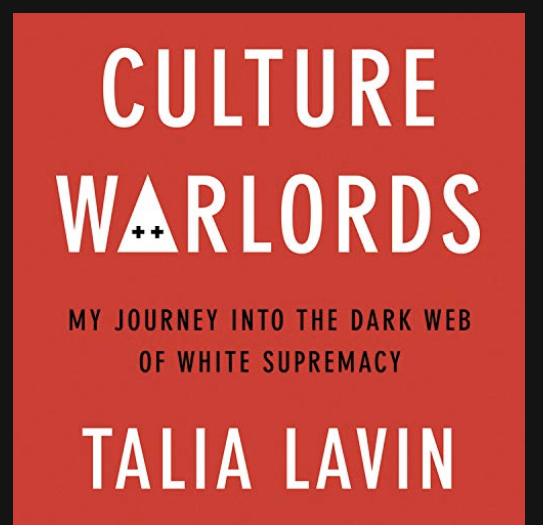
Picked up this book because I found the author on Leftist Twitter, being recommended by others. Ms. Lavin can be wicked witty and is well-worth a follow, though she does tweet a lot of personal stuff … personal stuff that isn’t very political at all. This book, however, is all about a certain cohort of the body politic – a particulary nasty and diseased bit of that body.
What better way for a journalist who deals with agoraphobia to spend her time than to log onto the Dark Web (insert Letterkenny voices here) and pretend to be a white supremacist in order to see what the other members of this, er, clan have to say when they believe they’re interacting with one of their own? Because it’s the Web, she can canvass internationally – fascists are everywhere – and see how things are going for the hatefully obsessed as they too try to reach across borders to maintain an All-White hegemony so they can protect Western Culture and White Women as they see fit.
Ms. Lavin also serves up a lot of history to show how anti-semitism grew over the ages to help light the tiki torches in Charlottesville. She also delves into the world of the incels and how they spend their time on the internet trying to make her feel bad via their laughably unrealistic, unscientific understanding of how women’s bodies work. Because … incels.
Read this to realize what the violent racist hatemongers would like to do, to see how racist hatemongers are fishing for more to join their cause, to understand how these idjits are both dangerous AND hamstringed by their own limited thought processes, and to enjoy some excellent wordsmithing on an ugly subject.
-

As I read more by African authors, set in Africa, I am made more and more aware of how class distinctions are such a part of everyday city life in places like Nigeria – as these cultures were hierarchal pre-Westernizarion, it seems somewhat inevitable that the people remain highly stratified, if not solely by birth than definitely by wealth. However, unlike authors in the USA, African writers do not shy away from making it very clear that their characters are very aware of their place in the social pecking order and throw that weight around without blinking. Having that weight is what makes this story workable.
This is a tale of two sisters, Ayoola and Korede: one strikingly beautiful, one not-so-much, born into an elite family that has made them into their adult selves: a sociopath and her enabler. Because they are sisters, they benefit from their class identities but are weighed down by their gender in a culture of machismo – so who among us can completely blame the sociopath for dealing with problematic males as she does … and then failing to feel remorse for her actions and going right back on the ‘gram to promote herself? The storyteller is the enabler, a nurse and all-around helpful & useful person who will never be valued as she should because her exterior, as a woman, is what determines worth in the shallowness of the post-colonial social media-obsessed Lagos that serves as our setting: not that these sisters couldn’t operate similarly in most any other place in our world where the cops are mostly corrupt and inept, the Rule of Law is so much lip service (yes, this includes the USA), and surfaces are everything.
Happily, the author is telling a singular story here that lets us feel Korede’s aggravation and desire to protect her sister as it can only happen to people living in Lagos. She also allows a pleasant dark humour to permeate since Korede is smart and smart people should always see and appreciate the ridiculous as well as the sublime. Though I do hope that someday Korede might relax enough to write a second entry in her TEDx-inspired notebook that was supposed to chronicle one thing that made her happy every day.
Warning: the only truly likable man in this tale is in a coma. Some days, this seems about correct.
-

This was the year that I’ve found myself ready to give up on Good & Bad or Good & Evil as terribly unhelpful and often harmful concepts that allow too many humans to get away with too many things that add up to planetary destruction – this was something that could almost be overlooked when humans kept their numbers under 3B but which has become intolerable now that almost 8B humans are actively trashing their home while constantly assuring themselves that they are, all things considered, good people.
Hench give us a view of superhero/supervillain land through the eyes of a relatively low-level hench person (superheroes have support teams and sidekicks, villains have hench people). In fact, this hench is a numbers-cruncher, a position that shouldn’t seem so lowly now that we’ve been exposed to the human “computers” in Hidden Figures, but facts are that the astronauts are the ones who graced all the magazines and Wheaties boxes in NASA’s glory days. Henches are by and large considered collateral damage – they chose the wrong side so one can’t get too upset when then wind up sustaining lethal or non-lethal injuries while performing their jobs. Except here we have a hench who does get upset and who doesn’t care for the performative gestures of apology that the superhero acts out in order to sustain the appearance of ‘goodness’ in the public eye.
-
first up: Injustice
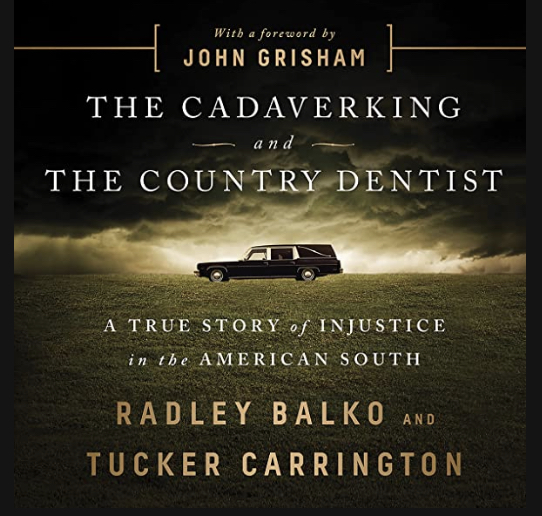
This year I wanted to write a bit about the words I read/listened to, and I’d like to kick off with the first book I finished this year that made a big impact. From Radley Balko, the author of Rise of the Warrior Cop: The Militarization of America’s Police Forces and the person who put the word “puppycide” into my vocabulary, this book made it even clearer to me how broken this country’s so-called justice system is. And how easy it is to pretend otherwise if you just accept the concepts that the system is based on as perfectly functional.
How many times have you seen a movie or tv show or read a book where “bite marks” were presented as conclusive evidence? Like most things that are repeated so often that they become accepted as fact in most people’s heads, once one is exposed to the how and why and actual evidentiary science (or lack thereof) that such forensic magic is based on, and how easily these things can be abused by prosecutors/cops looking for a “Win” and providers looking to make a profit – well, it just makes one feel rather bamboozled all over again
The victims of the bamboozle are Black and/or poor and/or any of the other people who should be used to being sacrificed so that those with more comforts to protect can go on believing that Omelas is still the best of all possible worlds for everyone. Until they are selected to suffer at the hands of corruption and expediency – a fate that Balko & Carrington make plain can happen to any of us not breathing the rarified air of this society’s uppermost strata.
There are those who fight the uphill battle against the power-that-be and they are deservedly given praise for their work. Sadly, there are few who can forego steady paychecks and devote themselves fully to that work. Still, I like to think that a book like this may allow a few people to refuse to go along with a slamdunk ‘guilty’ vote if they find themselves on a jury presented with the forensic ‘evidence’ that we’ve been schooled to rely and trust on by mainstream media.
-
Subscribe
Subscribed
Have a WordPress.com account? Log in now.

